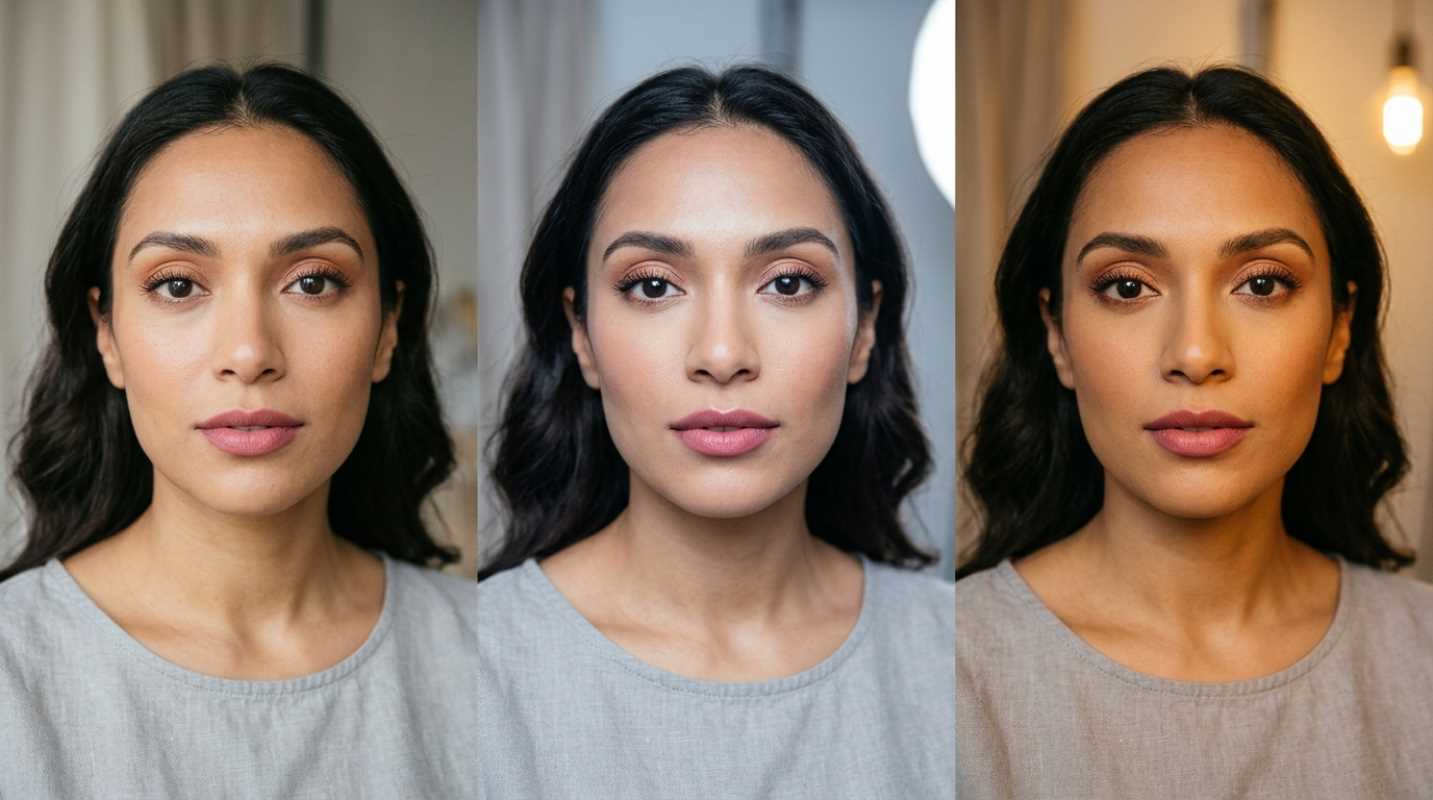
Have you ever spent forty minutes blending your foundation to absolute perfection, only to catch a glimpse of your reflection in your car mirror and gasp? You look like you are wearing a mask of orange paint. Or maybe a ghostly white sheet. We have all been there. It is one of the most frustrating beauty mysteries on the planet. Why does makeup that looks flawless in your bathroom suddenly look like a theatrical costume the second you step outside?
The culprit is not your technique. It is your lighting.
Light temperature and intensity play a massive role in how we perceive color and texture. When you apply makeup, you are painting a canvas that interacts with the light waves around it. If your light source is lying to you, your makeup will look like a mistake the moment you change environments. Let us break down the science behind how different lighting conditions alter your look so you can master your makeup in any setting.
The Truth About Fluorescent and Office Lighting
Let us talk about the dreaded office bathroom. Cool-toned fluorescent lights are notoriously unkind. These lights sit high on the Kelvin scale, usually around 5,500K to 6,500K, casting a stark, bluish-white hue over everything.¹ This cool temperature is great for keeping you awake at your desk, but it is a nightmare for your complexion.
Fluorescent light exaggerates cool tones, pale skin, and red undertones. It drains the warmth right out of your face, making you look sallow, tired, or washed out. When you look in a mirror under these harsh overhead tubes, your immediate instinct is to over-correct. You might reach for a heavy hand of bronzer, an overly bright blush, or thick layers of color-correcting concealer to combat that ghostly reflection.
But that is a trap. If you adjust your foundation and concealer for these harsh settings, you will look incredibly overdone in normal light. Instead, focus on lightweight, light-reflecting formulas. Use a color-correcting primer to neutralize redness before you even touch your foundation.
When applying makeup for a corporate environment, stick to neutral shades and light layers. It is always better to look a little soft under office lights than to look like a painted doll when you step out for lunch. Avoid heavy matte powders, which cling to dry patches and look incredibly chalky under cool office bulbs.
Sunlight The Ultimate Test
If fluorescent light is the villain of our story, natural daylight is the ultimate truth-teller. Midday sunlight has a balanced, full-spectrum color temperature of around 4,000K to 5,000K and a near-perfect Color Rendering Index (CRI).² This means it does not inject a fake yellow or blue cast onto your skin. It shows your true skin undertones and the exact pigment of your cosmetics.
This is the gold standard for blending and color correction. Sunlight is brutally honest. It will highlight every unblended line along your jaw, every patch of dry skin, and any harsh contour lines. Although that sounds intimidating, it is exactly what you want when you are putting your face on. If your makeup looks good in natural daylight, it will look good literally anywhere.
So how do you bring this gold standard into your morning routine?
• Set up near a window: Position your vanity or a small hand mirror near a window that gets plenty of indirect sunlight. Direct, blinding sunlight will make you squint and cast harsh shadows, but soft, indirect daylight is perfect.
• Check your work: If you cannot apply your makeup next to a window, do your routine in the bathroom, then take a small mirror to the nearest window for a quick sanity check before you leave.
• Blend, blend, blend: Use natural light to check your jawline, hairline, and the sides of your nose. These are the classic areas where an unblended foundation gathers.
Warm vs. Cool Lighting: Finding Your Balance
Now let us look at the other end of the spectrum: warm, yellow lighting. Think of cozy restaurants, dim bars, living rooms, and those traditional incandescent amber bulbs in older bathrooms. This lighting typically sits between 2,700K and 3,500K.
Warm light is incredibly flattering. It acts like a real-life filter, casting a soft, golden glow that masks skin texture, blurs blemishes, and hides uneven blending. But there is a major danger here. Because warm light hides color saturation and mutes cool tones, it is incredibly easy to overapply your makeup.
Have you ever put on blush in a dimly lit room, thought you looked perfectly sun-kissed, and then walked out into the sun looking like a clown? That is the classic warm-light trap. Pink lipsticks shift toward coral, blue-based reds look muddy, and your bronzer seems to disappear, prompting you to add layer after layer.
To find your balance, you need a neutral lighting setup that mimics a balanced environment. Emmy-winning makeup artist Kevin James Bennett notes that applying foundation with incorrect lighting can lead to major inconsistencies between your application space and the outside world.³ You want a light source that sits right in the sweet spot of 4,000K to 5,000K with a high CRI of 95 or above. This makes sure you see colors as they actually are, preventing the dreaded over-application of blush or bronzer.
If you want to upgrade your vanity setup to make sure your makeup looks flawless in any environment, here are some excellent tools to consider.
Pro Tips for Consistent Makeup Application
If you are ready to take control of your beauty routine, you do not need to completely remodel your bathroom. A few smart adjustments can make a world of difference.
First, invest in a vanity mirror with adjustable color temperatures. Look past vague marketing buzzwords like "daylight" or "natural white." Instead, look at the technical specs. You want a mirror that lets you toggle between warm (around 3,000K), neutral (around 4,500K), and cool (around 6,000K) settings.²
Second, implement a quick two-step lighting check. Apply your makeup under a neutral, daylight-mimicking setting to make sure your blending and color matching are flawless. Then, before you walk out the door, switch your mirror to the temperature of your destination. Heading to a romantic, candlelit dinner? Switch it to warm to make sure your highlight is hitting the right spots. Heading to a big corporate presentation? Toggle to cool to make sure your concealer is doing its job without looking cakey.
Finally, pay attention to light placement. Avoid harsh overhead lights that cast downward shadows under your eyes, nose, and chin. This trick of the light often fools you into applying excess under-eye concealer to cover dark circles that are actually just shadows.
Instead, use cross-lighting. Position two light sources at eye level on the left and right sides of your mirror to evenly illuminate your face and erase those deceptive shadows. With these simple adjustments, you will never have to fear the car mirror again.
Sources:
1. The Makeup Light - Color Temperature
https://themakeuplight.com/pages/color-temperature
2. Vanitii - Natural, Warm, and Cool White Lighting for Makeup
https://vanitii.com/blogs/vanity-mirror/natural-warm-cool-white-lighting-makeup
3. In My Kit - Lighting 101 for Makeup Artists
https://www.inmykit.com/p/lighting-101-for-makeup-artists